400 subscribers in two days with one article? Growth marketing celebrities brag about similar feats all the time, but is that achievable for a regular mortal?
I woke up at 6:00 like I usually do. I made some scrambled eggs, grabbed a cup of English Breakfast Tea, added a splash of milk, and sat down to work. I started my day by checking what’s new on GrowthHackers.com. This story by a mr. Dan Siepen was prominently at the top:

Wow, 76 upvotes and quite a few comments.
I clicked the link and saw that it was nothing more than forty short summaries with links to articles presented in a fancy format:
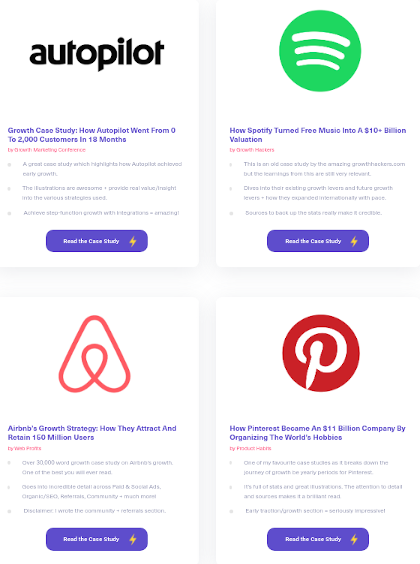
Someone who knew a thing or two about marketing was doing promotion. Perhaps I could learn something from them. Where else did they share it? Let’s do a quick Google search.
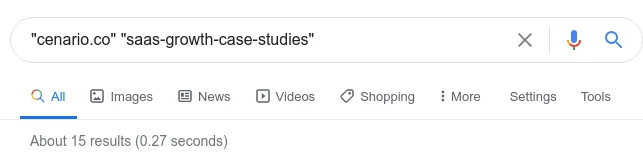
15 results. This is going to be interesting.
This is the part worth copying: do not only watch your own mentions. Watch how good marketers distribute their work. You can learn a lot by tracking where a successful article, launch, or competitor campaign shows up next.
Where the article was promoted
Indie Hackers
They created a post with a link to the article (no content) but stayed around to upvote and answer every comment. That got them 16 upvotes.

Hacker News
With a different title, they posted the article to Hacker News. The post didn’t reach the top, but a few people did see it and it received 6 upvotes.

Why the different title? I guess they learned a lesson from their failure in the past:

This was not submitted by Dan the Growth Marketing Consultant as previously, but rather by Vaibhav Namburi the Tech Lead. Different community, different tactic.
Quora
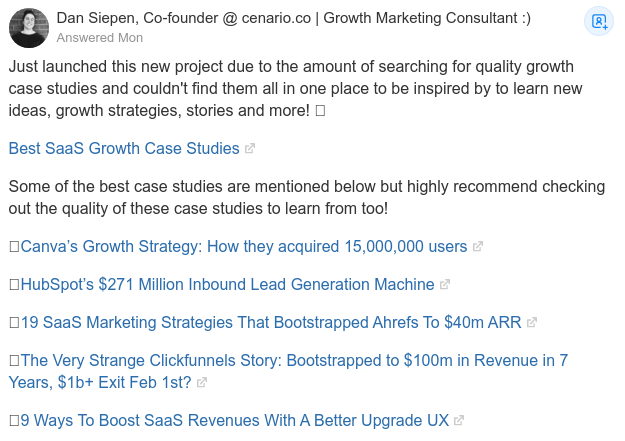
They answered “What are some good SaaS case studies?” on Quora:
An upvote from a coworker won’t hurt, here is mr. Vaibhav Namburi again:
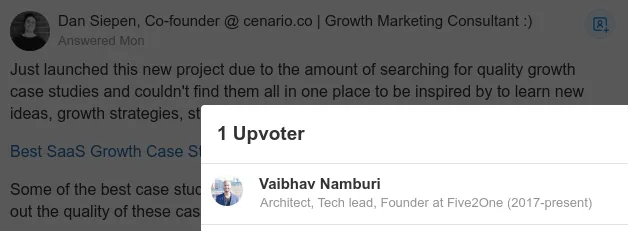
Generating traffic from Quora can be tricky, but at least it’s clear that upvotes from friends are standard practice.
Product Hunt
All of that is good promotion, and I’m sure it got them some traffic. But here is the brilliant part.
They launched it on Product Hunt. Yes, a simple list of forty articles was launched on PH. And it was upvoted 562 times.

Product Hunt is a terrible place to launch your product but an excellent one for something like this.
But why stop there? They wrote about their Product Hunt launch on r/SideProject.
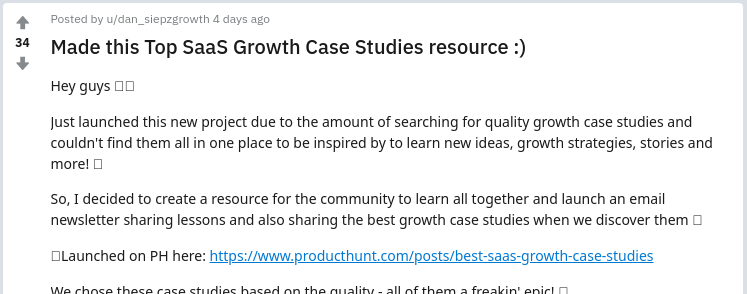
Note how they cautiously didn’t link to their article directly, but rather talked about the Product Hunt launch. All on a subreddit dedicated to that sort of things. Redditors famously hate marketers, so getting those 34 upvotes is quite an achievement. Sure, we’ve all seen posts with thousands of upvotes, but aiming for that is like trying to become the second Google. This approach is repeatable.
And tactful.
Indie Hackers (again)
It’s always a good idea to share your success (or failure) and follow up with a “what it was like” post.
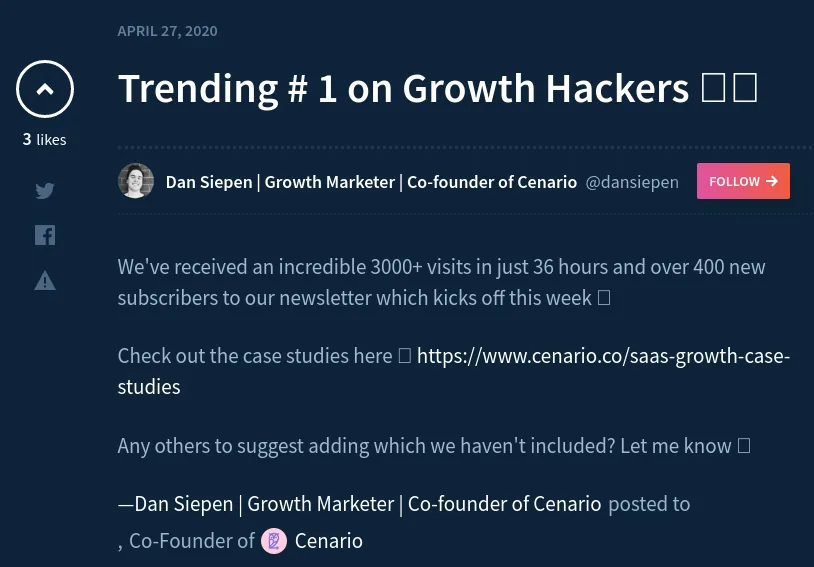
3 upvotes is nice, but I’m sure they would have reached the top again had they written a more detailed analysis.
3000+ visits, 400 subscribers, 36 hours, and one article. Very impressive.
Let’s summarize.
What made the campaign work
Based on what we saw, to run a successful campaign you have to:
- Promote. If you won’t push your content, who will?
- Adjust. Different communities have different customs. Don’t be foreign, adjust your format.
- Stick around (or create a Syften notification). Participate in the discussion. Don’t post and run.
- Make a meta post. People like success stories. Write about what it was like to reach the top.
If mr. Dan and Vaibhav make products as well as they promote them, then they’re on a road straight to the top.
Resources
- Product Hunt Launch Guide.
- How to Promote on Reddit Without Looking Like Spam.
- How to Do Content Marketing on Social News Sites.
- The cenario.co site by Dan Siepen has expired.